
What Do Timing Belts Do
2025-07-17
What Do Timing Belts Do?
Under the hood of every car, behind the whir of machinery and the roar of combustion, lies a component so vital that its failure can bring an engine to its knees: the timing belt. But what exactly do timing belts do? Far more than a simple strip of rubber, they are the orchestrators of engine synchronization, ensuring every part moves in perfect harmony. In this guide, we’ll dive into the core functions of timing belts, how they interact with other engine components, and why their role is irreplaceable in modern machinery.
Core Function: Synchronizing Critical Engine Components
At its most basic level, a timing belt’s primary job is to synchronize the rotation of the crankshaft and camshaft(s)—two of the engine’s most essential parts. Here’s why this matters:
- Crankshaft: Converts the up-and-down motion of pistons into rotational force (the power that moves your car). It rotates once for every two full piston cycles in a four-stroke engine.
- Camshaft: Controls the opening and closing of intake and exhaust valves, which allow air/fuel mixture into the cylinders and expel exhaust gases. Its rotation is directly linked to the crankshaft’s, but at half the speed (in most engines).
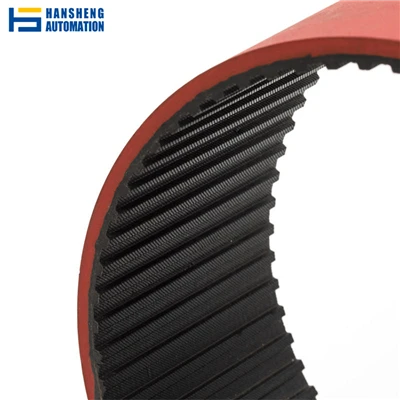
The timing belt ensures these two shafts spin in precise proportion. For example, in a typical four-cylinder engine, the crankshaft completes two full rotations for every one rotation of the camshaft. This ratio (2:1) is maintained by the belt’s teeth meshing with gears on both shafts, creating a rigid, non-slip connection that eliminates lag or misalignment.
Controlling Valve Timing: The Heart of Combustion
Valves are the engine’s “lungs”—they breathe in the air/fuel mixture and exhale exhaust. But their timing is everything. Open a valve too early or close it too late, and the engine loses power, efficiency, or even stalls. This is where the timing belt truly shines:
Coordinating with the Four-Stroke Cycle
A four-stroke engine operates in four phases, each dependent on precise valve timing:
- Intake Stroke: The camshaft opens the intake valve as the piston moves down, drawing in air/fuel. The timing belt ensures this happens exactly when the crankshaft positions the piston at the top of its cycle.
- Compression Stroke: Both valves close as the piston rises, compressing the mixture. The belt keeps the camshaft locked in place to prevent premature valve opening.
- Power Stroke: The spark plug ignites the compressed mixture, driving the piston down. The belt holds the valves closed to contain the explosion.
- Exhaust Stroke: The camshaft opens the exhaust valve as the piston rises again, expelling gases. The belt times this to start just as the piston begins its upward movement.
Preventing Valve-Piston Collisions
In interference engines (see our previous guide), the timing belt is the only barrier between valves and pistons. By maintaining strict synchronization, it ensures valves are fully closed when pistons reach the top of their travel—and vice versa. A 1-millisecond delay in valve closing can result in catastrophic contact, bending valves or cracking pistons.
Enabling Advanced Engine Designs
Modern engines (like those with dual overhead camshafts, or DOHC) rely on timing belts to coordinate multiple camshafts, each controlling a set of valves. Here’s how:
Dual Camshaft Synchronization
In DOHC engines, one camshaft operates intake valves, and another handles exhaust valves. The timing belt (or a secondary chain driven by the belt) links these camshafts, ensuring they open and close in sequence. For example, in a V6 engine, the belt may drive a primary camshaft, which then uses gears or a smaller belt to sync the second camshaft—maintaining a 1:1 ratio between them.
Variable Valve Timing (VVT) Integration
Many modern engines use VVT systems to adjust valve timing for better performance or fuel efficiency. The timing belt works with solenoids and oil pressure to slightly alter camshaft rotation relative to the crankshaft (e.g., advancing intake valve timing at high RPMs for more power). This requires the belt to maintain flexibility while still delivering precise synchronization—a feat made possible by high-tensile materials like Kevlar or glass fiber.
Beyond the Engine: Timing Belts in Other Machinery
While most famous for their role in car engines, timing belts perform similar synchronization tasks in other equipment:
Industrial Conveyors
In manufacturing, timing belts drive conveyor rollers, ensuring items move at a consistent speed. Their non-slip design prevents product jams, critical for assembly lines where timing (e.g., aligning parts for welding) must be exact.
3D Printers and CNC Machines
Precision is key in 3D printing, where layers of plastic are deposited with 0.1mm accuracy. Timing belts move the print head along X/Y axes, their tooth-to-pulley meshing ensuring no slippage that could ruin a print.
Lawnmowers and Small Engines
Even push mowers use timing belts to sync their crankshafts with blade rotation, ensuring the blade spins in rhythm with engine power—preventing stalling under heavy grass loads.
How Timing Belts Differ from Other Systems
To understand their unique role, compare timing belts to alternative 同步 methods:
- Timing Chains: Metal chains also sync engines but require lubrication and produce more noise. Belts run dry, reduce friction, and operate quietly—critical for passenger cars.
- Gear Drives: Gears offer zero slippage but are bulky and expensive. Belts achieve the same precision in a lighter, more compact design.
- Rubber V-Belts: These rely on friction and slip under load, making them unsuitable for valve timing. Timing belts’ toothed design eliminates this, making them the only choice for critical synchronization.
Why Timing Belt Health Directly Impacts Performance
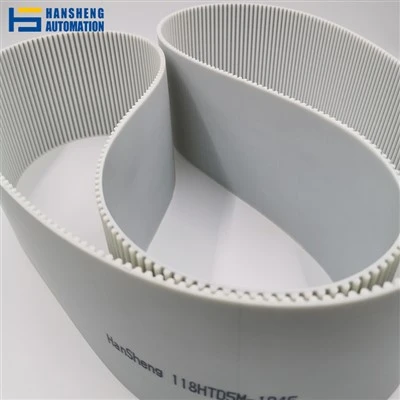
A worn or stretched timing belt loses its ability to maintain precise timing, leading to:
- Reduced Power: Valves opening late during the intake stroke limit air/fuel intake, cutting horsepower by 10–15% in severe cases.
- Poor Fuel Economy: Misaligned valves cause incomplete combustion, wasting fuel (up to 20% more in some vehicles).
- Misfires and Rough Idling: When the belt skips a tooth, cylinders fire out of sequence, triggering the check engine light and shaking the engine.
Conclusion: The Invisible Conductor of Engine Harmony
Timing belts do far more than “keep things moving”—they act as the engine’s conductor, ensuring every component performs its role at exactly the right moment. From coordinating valve openings in a four-stroke cycle to enabling advanced VVT systems, their ability to synchronize motion with millisecond precision is nothing short of engineering brilliance.
Understanding what timing belts do isn’t just for mechanics—it’s for anyone who wants to keep their vehicle (or machinery) running efficiently. By respecting their role and maintaining them properly, you ensure the symphony of combustion, motion, and power plays on without a single off-key note.
How to Tell If a Timing Belt Is Bad
How Do You Know If the Timing Belt Is Broken
Related Article

Gears are the backbone of mechanical transmission systems, converting rotational motion and torque between shafts to power everything from household appliances to industrial machinery.
What are the 4 types of gears

CNC machines (Computer Numerical Control machines) have transformed manufacturing by delivering unmatched precision, repeatability, and efficiency across material types—from metals to plastics and composites.
Which Industries Mostly Use CNC Machines

CNC machining is celebrated for its precision and versatility in shaping metals, plastics, and composites—but its subtractive nature (removing material from a solid workpiece to create parts) raises a critical question: “Is CNC machining wasteful?” At first glance, the piles of metal shavings, plastic chips, and scrapped parts from CNC operations might suggest yes.
Is CNC machining wasteful
