
Is a Drive Belt the Same as a Timing Belt
2025-07-24
Is a Drive Belt the Same as a Timing Belt?
For many car owners, under-the-hood components can feel like a foreign language. Terms like “drive belt” and “timing belt” are often thrown around interchangeably, but they refer to two distinct parts with very different roles. Mixing them up can lead to missed maintenance, unnecessary repairs, or even engine damage. In this blog, we’ll break down the key differences between drive belts and timing belts, why each matters, and how to tell them apart.
Defining the Basics: What Are Drive Belts and Timing Belts?
Before diving into their differences, let’s start with simple definitions. Both belts are critical to your vehicle’s operation, but they serve entirely separate purposes.
What Is a Drive Belt?
A drive belt (also called a serpentine belt, accessory belt, or V-belt) is a flexible rubber belt that transfers power from the engine’s crankshaft to various accessory components. These accessories include the alternator (which charges the battery), power steering pump, water pump, air conditioning compressor, and sometimes the radiator fan. Think of it as the “workhorse” that keeps your car’s auxiliary systems running.
Most modern vehicles use a single serpentine belt (a long, ribbed belt) that snakes around multiple pulleys, while older models may have several V-belts (each driving a specific accessory).
What Is a Timing Belt?
A timing belt is a toothed rubber belt (or sometimes a metal chain, called a timing chain) that synchronizes the rotation of the engine’s crankshaft and camshaft(s). This synchronization ensures that the engine’s valves open and close at precisely the right moment during the combustion cycle—when the pistons are in the correct position. Without this coordination, valves and pistons could collide, causing catastrophic engine failure.
Timing belts are enclosed in a protective cover to shield them from dirt, oil, and debris, as even small contaminants can damage their teeth or cause slippage.
The Core Differences: Function and Purpose
The most significant distinction between drive belts and timing belts lies in what they do. Let’s break down their roles in detail.
The Role of a Drive Belt: Powering Accessories
- Auxiliary Focus: Drive belts are all about powering external components. When the engine runs, the crankshaft spins, and the drive belt uses this motion to turn the pulleys of accessories like the alternator (so your battery stays charged) and the power steering pump (so you can turn the wheel easily).
- Non-Critical for Engine Timing: If a drive belt breaks, your car might still run, but accessories will fail. For example, a broken drive belt could cause the alternator to stop working, draining the battery, or the water pump to stop circulating coolant, leading to overheating. While inconvenient, this rarely causes immediate engine damage.
The Role of a Timing Belt: Keeping the Engine in Sync
- Internal Engine Coordination: Timing belts operate inside the engine’s core, ensuring that the camshaft(s) and crankshaft rotate in perfect harmony. The camshaft controls valve movement, while the crankshaft controls piston movement. A 4-stroke engine (the most common type) relies on this synchronization to avoid valve-piston collisions.
- Critical Failure Risk: A broken timing belt is often catastrophic. If the belt snaps while the engine is running, the camshaft stops, but the crankshaft may keep moving due to momentum. This mismatch can bend valves, crack pistons, or even destroy the cylinder head—repairs that can cost thousands of dollars.
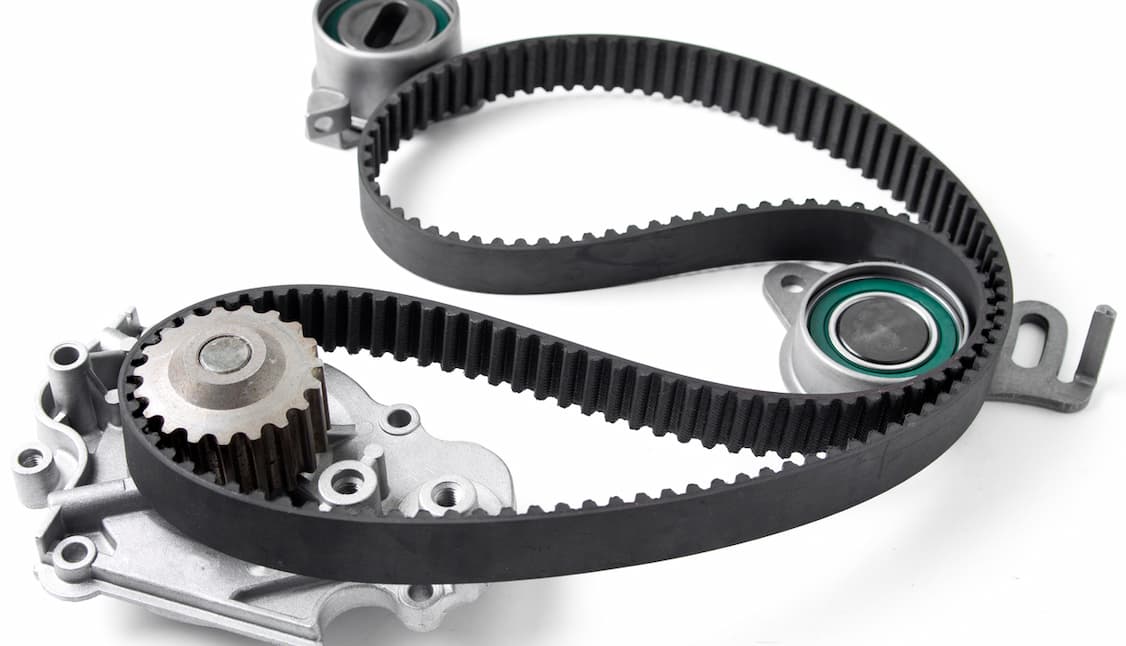
Drive Belt
Physical Differences: How to Identify Them
Even if you’re not a mechanic, you can often tell drive belts and timing belts apart by their appearance, location, and design.
Location Under the Hood
- Drive Belt: Typically located on the front of the engine, exposed (or partially exposed) without a protective cover. You can often see it by popping the hood and looking for a long, ribbed belt wrapping around several pulleys.
- Timing Belt: Hidden under a plastic or metal cover at the front (or sometimes the side) of the engine. This cover is bolted in place to protect the belt from debris, so you’ll need tools to access it.
Design and Material
- Drive Belt:
-
- Usually smooth on one side and ribbed on the other (for serpentine belts) or V-shaped (for older V-belts).
-
- Made of rubber reinforced with fibers (like polyester or aramid) for flexibility and strength.
-
- No teeth—relies on friction to grip pulleys.
- Timing Belt:
-
- Has evenly spaced teeth (or grooves) on the inner surface that mesh with gears on the crankshaft and camshaft(s).
-
- Thicker and more rigid than drive belts, with a rubber compound designed to withstand high heat and tension.
-
- Some modern vehicles use timing chains (metal) instead of belts, but these are still distinct from drive belts.
Size and Length
- Drive belts vary in length but are generally longer than timing belts, as they need to wrap around multiple accessory pulleys.
- Timing belts are shorter and more compact, designed to fit tightly between the crankshaft and camshaft pulleys.
Maintenance: Replacement Intervals and Warning Signs
Both belts require regular maintenance, but their replacement schedules and failure symptoms differ significantly.
Drive Belt Maintenance
- Replacement Interval: Usually every 60,000 to 100,000 miles, but this varies by vehicle. Some serpentine belts can last up to 150,000 miles with proper care.
- Warning Signs of Wear:
-
- Squealing or chirping noises (especially when starting the engine or accelerating).
-
- Visible cracks, fraying, or glazing (a shiny, hardened surface).
-
- Looseness or slipping (which may cause accessories to work intermittently).
- What Happens If It Fails: Accessories like the alternator or power steering pump will stop working. Your car may stall (if the water pump fails, causing overheating) but rarely suffers permanent engine damage.
Timing Belt Maintenance
- Replacement Interval: Typically every 60,000 to 100,000 miles, though some manufacturers recommend intervals as low as 40,000 miles. Age matters too—rubber belts degrade over time, even if the car isn’t driven much.
- Warning Signs of Wear:
-
- A faint ticking noise from the engine (caused by belt slippage).
-
- Visible cracks, teeth wear, or oil contamination (from leaks).
-
- Engine misfires or difficulty starting (if the belt is slipping).
- What Happens If It Fails: As mentioned, catastrophic engine damage is likely. Valves may bend, pistons may crack, and repairs can cost $2,000 or more—sometimes exceeding the value of older cars.
Common Myths and Misconceptions
Even experienced car owners can fall prey to myths about these belts. Let’s debunk a few:
“They’re the Same Thing—Just Different Names”
This is the most common myth. As we’ve shown, drive belts and timing belts have distinct functions: one powers accessories, the other synchronizes engine components. Confusing them can lead to missed timing belt replacements, which is far more dangerous.
“If My Car Has a Timing Chain, I Don’t Need to Worry About Belts”
Timing chains are more durable than belts but still require maintenance (e.g., oil changes to prevent wear). And your car still has drive belts—so you’ll need to inspect those regularly.
“I Can Ignore a Squealing Belt It’s Just Annoying”
A squealing drive belt is often a sign of slippage or wear. Ignoring it can lead to belt failure, leaving you without power steering or a working battery. For timing belts, unusual noises are even more critical—they may signal imminent failure.
“Replacing One Means Replacing the Other”
There’s no need to replace both belts at the same time unless both show signs of wear. Follow your vehicle’s maintenance schedule for each separately.
Why It Matters: The Cost of Confusion
Mistaking a drive belt for a timing belt (or vice versa) can have real consequences. For example:
- Delaying a timing belt replacement because you thought it was “just the drive belt” can lead to engine failure.
- Overlooking a worn drive belt because you focused only on the timing belt may leave you stranded with a dead battery or no power steering.
- Incorrectly replacing a drive belt when the timing belt needs work wastes money and leaves the more critical issue unaddressed.
Knowing the difference helps you prioritize maintenance and communicate effectively with mechanics. When a technician mentions “belt replacement,” ask which one—this ensures you’re on the same page.
Conclusion
In short, no—a drive belt is not the same as a timing belt. They serve distinct roles: drive belts power your car’s accessories, while timing belts keep the engine’s internal components in sync. Their locations, designs, and maintenance needs are equally different, and confusing them can lead to costly mistakes.
By learning to identify each belt and understanding their roles, you’ll be better equipped to keep your vehicle running smoothly. Regular inspections (checking for cracks, noises, or wear) and following manufacturer-recommended replacement intervals are key. Whether you’re a DIY enthusiast or rely on a mechanic, knowing the difference ensures you’re making informed decisions about your car’s health.
Serpentine Belt vs. Timing Belt
How to Inspect a Timing Belt
Related Article

Gears are the backbone of mechanical transmission systems, converting rotational motion and torque between shafts to power everything from household appliances to industrial machinery.
What are the 4 types of gears

CNC machines (Computer Numerical Control machines) have transformed manufacturing by delivering unmatched precision, repeatability, and efficiency across material types—from metals to plastics and composites.
Which Industries Mostly Use CNC Machines

CNC machining is celebrated for its precision and versatility in shaping metals, plastics, and composites—but its subtractive nature (removing material from a solid workpiece to create parts) raises a critical question: “Is CNC machining wasteful?” At first glance, the piles of metal shavings, plastic chips, and scrapped parts from CNC operations might suggest yes.
Is CNC machining wasteful
