
How Do Pulleys Work
2025-07-08
How Do Pulleys Work?
Pulleys are among the most fundamental simple machines, yet their impact on human civilization is profound. From ancient construction sites to modern industrial complexes, these devices have enabled us to move heavy loads with far less effort than would otherwise be possible. But have you ever stopped to wonder exactly how pulleys work? In this blog, we’ll dive deep into the mechanics of pulleys, exploring their design, types, and the science behind their ability to make work easier.
What Is a Pulley?
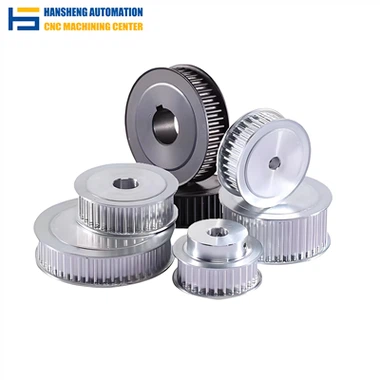
At its core, a pulley is a simple machine consisting of a few key components: a wheel with a groove around its circumference, a rope, cable, belt, or chain that fits into the groove, and an axle that allows the wheel to rotate freely. The groove is crucial—it keeps the rope or cable from slipping off the wheel as it moves.
Pulleys are classified as “simple machines” because they have few moving parts and perform work by altering the direction or magnitude of a force. Along with levers, inclined planes, wedges, screws, and wheels and axles, pulleys are foundational to understanding how humans have harnessed physical principles to overcome resistance.
The Basic Principle: How Pulleys Manipulate Force
To understand how pulleys work, we first need to recall a basic concept in physics: work. Work is defined as the force applied to an object multiplied by the distance the object moves in the direction of that force (Work = Force × Distance). Pulleys don’t reduce the total amount of work needed to move an object, but they do redistribute how that work is done—either by changing the direction of the force or by reducing the amount of force required (at the cost of increasing the distance over which the force is applied).
Let’s break down the two primary ways pulleys function:
Changing the Direction of Force
One of the simplest functions of a pulley is to change the direction of the force applied. This might seem like a small benefit, but it can make a huge difference in practical scenarios.
Imagine trying to lift a heavy bucket of water straight up from a well. You’d have to exert an upward force equal to the weight of the bucket. But with a pulley mounted at the top of the well, you can pull downward on the rope, and the bucket will rise upward. Gravity assists your downward pull, making the task feel easier even though the force required is the same as lifting the bucket directly.
In this case, the pulley doesn’t reduce the force—it merely redirects it, aligning your effort with the natural pull of gravity.
Reducing the Amount of Force Needed
While some pulleys only change force direction, others can actually reduce the amount of force required to lift a load. This is where the number of ropes supporting the load comes into play.
When a pulley (or system of pulleys) distributes the weight of the load across multiple ropes, each rope bears a fraction of the total weight. For example, if two ropes support a load, each rope carries half the weight, meaning you only need to exert half the force to lift it. However, there’s a trade-off: you’ll need to pull the rope twice as far as the load rises. This trade-off between force and distance is consistent with the principle of work—since work remains constant, reducing force means increasing distance.
Types of Pulleys and How Each Works
Pulleys come in three main types, each with distinct characteristics and applications. Let’s explore how each type functions:
1. Fixed Pulleys
A fixed pulley is attached to a stationary structure, such as a ceiling, beam, or wall. Its axle doesn’t move—it stays in place as the rope moves over the wheel.
How it works: As mentioned earlier, a fixed pulley’s primary role is to change the direction of the force. The force required to lift the load is equal to the weight of the load (ignoring friction). For example, if you’re lifting a 100-pound box with a fixed pulley, you still need to exert 100 pounds of force, but you can pull downward instead of upward.
Common uses: Flagpoles (the pulley at the top allows you to raise the flag by pulling down on the rope), window blinds (the pulley changes the direction of the force to tilt or raise the blinds), and well pulleys.
2. Movable Pulleys
Unlike fixed pulleys, movable pulleys are not attached to a stationary object. Instead, the pulley itself is attached to the load, and both the pulley and the load move together as the rope is pulled.
How it works: A movable pulley reduces the force needed to lift a load because the load is supported by two ropes (one on either side of the pulley). This means the force required is roughly half the weight of the load (again, ignoring friction). For example, lifting a 100-pound load with a movable pulley would require about 50 pounds of force. However, you’ll need to pull the rope twice the distance the load travels—if the load rises 1 foot, you’ll pull 2 feet of rope.
Common uses: Construction cranes (where movable pulleys are part of larger systems), some types of exercise equipment, and elevators (to help reduce the force needed to lift the elevator car).
3. Pulley Systems (Block and Tackle)
A pulley system, or block and tackle, combines fixed and movable pulleys to maximize mechanical advantage—the ratio of the load lifted to the force applied. By using multiple pulleys, these systems can reduce force significantly.
How it works: The mechanical advantage of a pulley system depends on the number of ropes supporting the load. Each additional rope (or segment of rope) supporting the load increases the mechanical advantage. For example:
- A system with two supporting ropes has a mechanical advantage of 2 (force is halved).
- A system with three supporting ropes has a mechanical advantage of 3 (force is reduced to one-third).
- And so on.
To calculate the mechanical advantage, simply count the number of ropes that are directly supporting the load. Note that ropes that are only used to redirect force (like those in fixed pulleys not attached to the load) do not count toward the mechanical advantage.
Example: A block and tackle with one fixed pulley and one movable pulley has two ropes supporting the load. Thus, the force required is half the load’s weight, and the distance pulled is twice the load’s travel distance. Adding more pulleys increases the number of supporting ropes, further reducing the force needed.
Common uses: Shipping and logistics (to lift heavy crates onto trucks or ships), stage rigging (to lift scenery and equipment), and rescue operations (to hoist people or supplies in challenging environments).
The Role of Friction in Pulley Performance
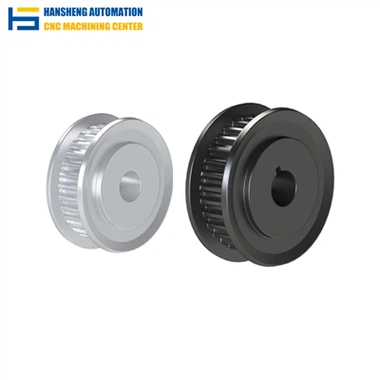
In ideal scenarios, we often ignore friction when explaining pulley mechanics, but in real-world applications, friction plays a role. Friction occurs between the rope and the pulley’s groove, as well as in the pulley’s axle. This means the actual force required to lift a load is slightly more than the theoretical calculation (e.g., a movable pulley might require 55 pounds of force to lift a 100-pound load instead of the ideal 50 pounds).
To minimize friction, pulleys are often designed with lubricated axles or ball bearings, which allow the wheel to rotate more smoothly. High-quality pulleys in industrial settings are engineered to reduce friction as much as possible, ensuring they operate efficiently.
Real-World Applications: How Pulleys Shape Our Lives
Pulleys are everywhere, even if we don’t always notice them. Here are some everyday examples of how pulleys work to make tasks easier:
- Elevators: Elevators use a system of pulleys and counterweights. The elevator car is attached to one end of a cable, and a counterweight (roughly equal to the weight of the car plus half its maximum load) is attached to the other end. This balance reduces the force needed to move the car up and down.
- Cranes: Construction cranes use complex pulley systems to lift heavy materials like steel beams and concrete blocks. The more pulleys in the system, the heavier the load the crane can lift.
- Window Washers’ Platforms: Workers who clean high-rise windows stand on platforms suspended by ropes and pulleys. The pulley system allows them to raise, lower, and position the platform safely.
- Gym Equipment: Machines like cable machines use pulleys to redirect and distribute force, allowing users to perform exercises like lat pulldowns and tricep pushdowns with controlled resistance.
Conclusion: The Genius of Simplicity
Pulleys are a testament to the power of simple machines. By manipulating force direction and distributing load weight across ropes, they enable humans to accomplish feats of strength that would otherwise be impossible. From ancient pyramids (where pulleys may have helped move massive stones) to modern skyscrapers, pulleys have been a cornerstone of engineering progress.
The next time you raise a flag, take an elevator, or watch a crane at work, take a moment to appreciate the pulley—a humble device that leverages basic physics to make the extraordinary feel ordinary.
How Does a Pulley Make Work Easier
What Is a Pulley
Related Article

Gears are the backbone of mechanical transmission systems, converting rotational motion and torque between shafts to power everything from household appliances to industrial machinery.
What are the 4 types of gears

CNC machines (Computer Numerical Control machines) have transformed manufacturing by delivering unmatched precision, repeatability, and efficiency across material types—from metals to plastics and composites.
Which Industries Mostly Use CNC Machines

CNC machining is celebrated for its precision and versatility in shaping metals, plastics, and composites—but its subtractive nature (removing material from a solid workpiece to create parts) raises a critical question: “Is CNC machining wasteful?” At first glance, the piles of metal shavings, plastic chips, and scrapped parts from CNC operations might suggest yes.
Is CNC machining wasteful
