
In the era of TOPCon unifying the world, is HJT about to rise?
author: Hansheng Automation
2023-06-01
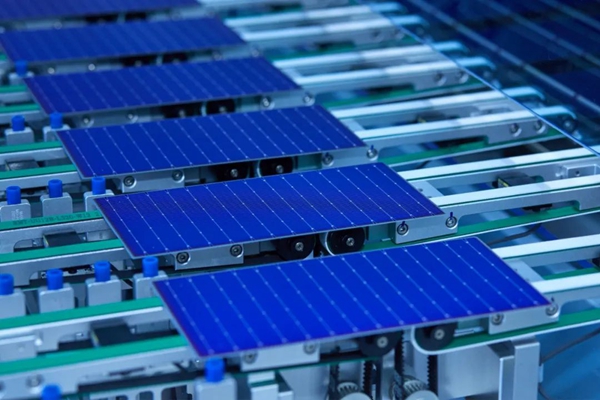
2022 is the first year of TOPCon, so when will the spring of HJT (heterojunction) come?
At present, TOPCon is significantly ahead of HJT in the race of the N-type technology route. In the first half of last year, some top component companies were still hesitant about whether to choose TOPCon or HJT. In February of this year, after setting a world record for the conversion efficiency of crystalline silicon batteries at 26.81% on the HJT technology route, Longji Green Energy announced the adoption of TOPCon technology in its battery project in Ordos. Longji has demonstrated to the industry through practical actions that TOPCon is at least one of the most economical, competitive, and suitable technology routes at present - although not the "ultimate technology", it is a "transitional technology".
So, does HJT still have a future?
During SNEC, supporters of HJT gathered together to discuss the future. Everyone agrees that HJT's path is winding, but its future is bright - with the increase in HJT's mass production in 2023, it is expected to accelerate in 2024.
01
This year's production capacity will exceed 50GW
Although some old players, represented by Longji Green Energy, have turned to TOPCon, new players also tend to choose TOPCon with lower investment costs. However, there are still a large number of enterprises adhering to the HJT route, such as photovoltaic dark horse Huasheng New Energy, Dongfang Risheng, Jingang Photovoltaics, Sanwu Interconnection, Baoxin Energy, etc.
During the SNEC period, a set of data released by SOLARZOOM think tank showed that there are currently nearly 300 GW of planned HJT production capacity. As of the first quarter of 2023, including overseas production, the production capacity of heterojunction has reached 20.51GW, with overseas production capacity of 1.74GW and domestic production capacity of 18.77GW. In addition, by the end of 2023, the domestic market will also add 33.1GW of new HJT production capacity. By the end of this year, the HJT production capacity of China's photovoltaic enterprises will exceed 50GW.
A few days before the SNEC exhibition, Hongruida announced the signing of a 30GW heterojunction strategic cooperation agreement with Huasheng New Energy, which will deliver a 30GW heterojunction HJT component full line intelligent factory solution to multiple global bases of Huasheng New Energy.
Various signs indicate that HJT is gradually approaching. There is only one logic, as long as one can make money, more and more companies will definitely join the HJT camp.
Previously, the official website of Huasheng New Energy announced that the company plans to achieve a total production capacity of 40GW during the 14th Five Year Plan period. That is to say, by the end of 2025, Huasheng will have 40 GW of HJT production capacity fully produced, which fully demonstrates the company's confidence in HJT. In terms of finance, there are reports online that Huasheng New Energy is expected to have revenue and net profit of 8 billion yuan and 200 million yuan respectively in 2023. The company will launch a stock reform in the second half of this year and prepare for an IPO. From this perspective, Huasheng's HJT has achieved positive cash flow and will have good profit performance, proving that the company's products have a certain degree of competitiveness in the market.
Today, when TOPcons are making great progress, it is likely to be tomorrow for HJTs.
According to third-party statistics, as of the end of 2022, TOPCon's landing capacity is around 81GW. In 2023, TOPCon began to explode. According to PVInfoLink statistics, the annual production capacity of photovoltaic cells is expected to reach 1111GW in the fourth quarter of 2023, an increase of 481GW month on month, or 76%. Among them, the proportion of N-type production capacity will increase from 21% in the first quarter of 2023 to 51% in the fourth quarter of 2023.
2023 is a critical year for the cost-effectiveness of HJT batteries and the acceleration of industrialization. According to the development speed of TOPCon, HJT will also experience a major outbreak by 2024 at the latest.
02
How to reduce costs in all aspects
During the 2023 SENC exhibition, equipment manufacturer Maiwei Co., Ltd. Chairman Zhou Jian shouted to HJT colleagues at the "Forum on Latest Mass Production Progress of Heterojunctions and HJT Heterojunction Night": HJT's route is right, and costs can be reduced.
Maiwei's anxiety is even greater than that of photovoltaic cell and component companies. Maiwei Group is the equipment leader of HJT, while Jiejia Weichuang is the TOPCon leader. By comparing the stock price trends of the two companies, one can understand Zhou Jian's mood.
The main reason why companies choose TOPCon is its low investment cost in production lines. According to statistical data from the China Photovoltaic Industry Association, in 2022, TOPCon battery lines will be newly put into operation, with an equipment investment cost of approximately 190 million yuan/GW, slightly higher than PERC batteries; The investment cost of HJT battery equipment is approximately 364 million/GW.
At present, the equipment cost of the TOPCon production line has been reduced to 110 million yuan/GW, while the equipment cost of the HJT production line has also been reduced to below 300 million yuan/GW.
Zhou Jian said, "On the basis of HJT's existing 0.15 yuan/W higher than conventional technology, continue to stack 110-90 μ With multiple technologies beyond the battery, HJT can achieve a cost advantage of 0.02 yuan/W lower than conventional technologies, including the application of silicon wafers and edge materials, optimization of silicon/impurity absorption, consumption reduction of 0BB silver slurry, application of silver coated copper, and scale effects
From this judgment, although HJT may still not be able to compare with TOPCon in terms of cost, it has shown significant cost advantages compared to traditional P-type batteries. As long as the production capacity is released, the cost reduction speed of HJT will definitely be astonishing.
During the SNEC period, the Carbon Catcher received almost the same answer from another equipment company, Ideal Wanlihui: "Now the equipment costs of HJT are rapidly decreasing. The more companies participate in HJT, the larger the production capacity, which is more conducive to the rapid decline of HJT equipment investment.
In addition to the rapid reduction of equipment costs, the cost reduction approach of HJT's technology route also includes production processes, and so on.
In response to the three major pain points of high consumption, low printing speed, and wide line width of silver paste used in HJT batteries, Hong Wei, Senior Technical Director of Jingyin, pointed out that with the development of technology, especially the application of silver coated copper technology, the new generation of metal paste can fully meet the requirements of high conductivity, ultra-fine line printing, high welding tension, and low cost.
Hong Wei further explained that by adding technologies such as no main gate, the silver content in silver coated copper will be reduced from 40-50% to 30-40% in the future, and the slurry consumption will be reduced from 14-16mg/W to 10-12mg/W. The metallization cost will also be reduced from 7-8 points/W to 3-5 points/W, fundamentally solving the high cost of HJT caused by metallization.
The speed at which top enterprises are industrializing HJT is actually very fast. It is particularly worth mentioning that the component rookie Tongwei Co., Ltd. made an appearance during SNEC with HJT component 730W+THC. This product adopts silver free technology. It is understood that this silver free HJT component will be mass-produced as soon as the second half of this year. The most critical point is that Tongwei's products direct proof that HJT batteries can be silver free, which will greatly reduce costs. Previously, Tongwei had conducted in-depth cooperation with Shanghai Microsystems Institute and other institutions in HJT technology many years ago, and had a deep technical reserve. In March of this year, Tongwei once again broke the world record for mass production efficiency (non laboratory) of HJT batteries with a conversion efficiency of 26.18%.
Dongfang Risheng adopts various technologies such as double-sided passivation contact technology, 100 micron ultra-thin silicon wafer overlay double-sided microcrystalline technology, and multiple main gates in its photovoltaic heterojunction components, and also focuses on reducing costs.
Reducing silicon consumption is also an important direction for cost reduction. Compared to TOPCon and P-type batteries, HJT is more suitable for thinner silicon wafers. Currently, Dongfang Risheng plans to import 90 micron silicon wafers. The thickness of P-type batteries is generally around 140 microns. During the SNEC period, High Tech launched its first 60 micron silicon wafer, providing the possibility for HJT to adopt thinner silicon wafers in the future and opening up a channel for cost reduction.
Guangsheng Semiconductor and Prey Optoelectronics of the United States Sign a Strategic Cooperation Relationship Again
TSMC suddenly heard two big news, foreign media: Zhang Zhongmou no longer follows the lead of the United States
Related Article

In order to create new products that are constantly emerging on the market, we use different methods to process various materials.
What is Molding Processing? We will introduce some representative molding processing methods

In the context of vehicle electrification and intelligence, human-computer interaction with consumer experience and intelligent control as the core has become an important development theme of intelligent cockpits. The on-board display is at the core of the intelligent cockpit, benefiting from the continuous development of the Internet of Vehicles and smart cars, the on-board display will usher in new development opportunities.
Lighting up new opportunities for automotive electronics - all at the 2025 Guangzhou International Automotive Intelligent Cockpit and Vehicle Display Technology Event

The 2025 Asia International Power Semiconductor, Materials and Equipment Technology Exhibition will focus on "Focusing on Cutting-edge Technology Breakthroughs and Empowering Industrial Innovation and Integration". It will be held on November 20-22, 2025 at Guangzhou Poly World Trade Center Expo!
Focus on the power semiconductor industry - APSME 2025 Asia International Power Semiconductor, Materials and Equipment Technology Exhibition will be held in Guangzhou

Lexey's multi-axis bus stepper drivers – 2DM3/2CL3-EC (open/closed-loop) dual-axis series and 4DM3/4CL3-EC (open/closed-loop) four-axis series are innovative technologies designed to solve the above problems and help your equipment to achieve efficient upgrades.
"Three provinces" drive: Leisai multi-axis bus stepping, opening a new chapter in the miniaturization and upgrading of precision equipment