
In 2023, with the outbreak of AI, the robot industry is stronger than the market!
author: Hansheng Automation
2023-06-15
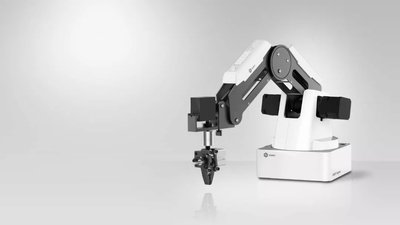
On June 14, BOC Securities released a research report on the 2023 medium-term strategy of the mechanical equipment industry, which highlighted "embracing robots and AI intelligent manufacturing". The research report believed that the current downstream wind power equipment and energy storage equipment belong to the high boom track, and robots will bring more industrial opportunities.
According to the research report, in the field of industrial robots, AI can enhance the ability of robots to adapt to differences and help further increase the penetration rate of robots in the industrial field.
At present, the penetration rate and localization rate of industrial robots in China continue to increase. AI empowering intelligent manufacturing will bring huge opportunities to the industry. Currently, the development of robots only needs to wait for the recovery of the manufacturing industry. According to statistics, the sales of industrial robots in China are expected to exceed 300000 units in 2022, with a year-on-year growth rate of over 15%; In 2023, it is estimated that the sales volume of industrial robots will reach 375000 units, with a year-on-year growth rate of more than 23%. Institutions are optimistic that the robot market will continue to grow in the future.
Demographic dividend disappears, machine replacement is imperative
In the last century, China relied on the Demographic dividend to develop rapidly. However, since the 21st century, China has gradually entered the aging era, and the age appropriate labor force is showing a continuous downward trend. By 2020, the labor force population aged 16-65 in China has dropped from 73% ten years ago to 68.2%. Under the task of ensuring productivity and development, it is a general trend for robots to join the production work.
The increase in labor costs in the manufacturing industry is also one of the important factors accelerating machine replacement. According to data from the National Bureau of Statistics, the average wage of urban employment in China's manufacturing industry was 30916 yuan in 2010. By 2020, this number had reached 78147 yuan, and in 2022, it was close to 90000 yuan, with a ten-year growth rate of over 150%. The rapid decline in the workforce and the significant increase in labor costs pose a serious threat to the survival of manufacturing enterprises, forcing them to reduce production costs. As a result, robots have opened up a huge market space.
As a result, the density of robots in China has also rapidly increased. According to IFR statistics, the density of industrial robots in China's manufacturing industry in 2021 was 322 units/10000 people, surpassing the United States and ranking fifth in the world. At the same time, it has become the world's largest consumer of industrial robots for 9 consecutive years.
In January 2023, the Ministry of Industry and Information Technology jointly issued the "Implementation Plan for the" Robot+"Application Action" with 17 departments, proposing that by 2025, the density of manufacturing robots will double compared to 2020. By then, the density of robots in China will be close to 500 units/10000 people, which is expected to surpass traditional industrial powers such as Japan and Germany. This means that the industrial robot market in China will further expand.
Downstream is in a period of development, and the robot industry is under short-term pressure
In 2020, a COVID-19 swept the world, and the global manufacturing industry was severely hit. Many industries were confronted with various problems such as shutdown and supply interruption. Although the growth rate of industrial robots reached a small peak during this period, the manufacturing industry was still severely hit.
In 2023, due to China's economic recovery still falling short of expectations, the downstream industries of industrial robots such as automobiles and 3C electronics continue to have weak demand, directly leading to a year-on-year decline in the production and sales of robots in Q1 2023. According to data from the National Bureau of Statistics, the cumulative production of robots from January to April 2023 was 142200 units, a year-on-year decrease of 4.40%.
Statistics show that in the first quarter of 2023, the completed amount of fixed assets investment in automobile and 3C manufacturing increased by 18.50% and 14.20% respectively year on year, still in a high growth range. In the short term, we should wait for the gradual release of demand, and the industry still has great potential for bottoming out and rebounding.
The rise of domestic components and the preparation of the embodied intelligence industry
Although humanoid robots currently face issues such as immature technology, insufficient application scenarios, and high costs, with the emergence of numerous humanoid robots such as Tesla and the rapid development of AI models, embodied intelligence has become a promising future intelligence mode for technology giants.
According to Goldman Sachs' "Human Robot Investment Case" research report, in the next 10-15 years, the size of the human robot market will reach at least $6 billion, which is on par with the electric vehicle market; Musk also stated that the demand for humanoid robots in the future could reach an astonishing 20 billion, potentially becoming Tesla's long-term value.
Compared to industrial robots, humanoid robots have a more complex structure, with motion module costs accounting for up to 50% of the entire machine. The industrialization of humanoid robots will generate a large demand for motion drive modules, which may involve core components such as harmonic reducers, motors, ball screws, sensors, etc. Taking Tesla's Optimus Prime robot as an example, it has a total of 40 actuators throughout its body, including 28 actuators for its trunk and limbs, and 12 actuators for its hands, which can achieve over 200 degrees of freedom throughout its entire body.
In recent years, there has been a wave of domestic replacement, and core component manufacturers such as harmonic reducers and servo motors with independent intellectual property rights have sprung up like mushrooms after rain. At present, the performance and market recognition of domestic components are basically on par with imported products, and the robot industry chain is basically formed. Humanoid robots are expected to rely on domestically produced products, and in the wave of automation and intelligence, they will gain broad development space with the advantage of product cost-effectiveness.
Coherent's New Fiber Laser: Improves the Welding Stability of EV Batteries
Robots that can breathe, sweat, and tremble have been born
Related Article

In order to create new products that are constantly emerging on the market, we use different methods to process various materials.
What is Molding Processing? We will introduce some representative molding processing methods

In the context of vehicle electrification and intelligence, human-computer interaction with consumer experience and intelligent control as the core has become an important development theme of intelligent cockpits. The on-board display is at the core of the intelligent cockpit, benefiting from the continuous development of the Internet of Vehicles and smart cars, the on-board display will usher in new development opportunities.
Lighting up new opportunities for automotive electronics - all at the 2025 Guangzhou International Automotive Intelligent Cockpit and Vehicle Display Technology Event

The 2025 Asia International Power Semiconductor, Materials and Equipment Technology Exhibition will focus on "Focusing on Cutting-edge Technology Breakthroughs and Empowering Industrial Innovation and Integration". It will be held on November 20-22, 2025 at Guangzhou Poly World Trade Center Expo!
Focus on the power semiconductor industry - APSME 2025 Asia International Power Semiconductor, Materials and Equipment Technology Exhibition will be held in Guangzhou

Lexey's multi-axis bus stepper drivers – 2DM3/2CL3-EC (open/closed-loop) dual-axis series and 4DM3/4CL3-EC (open/closed-loop) four-axis series are innovative technologies designed to solve the above problems and help your equipment to achieve efficient upgrades.
"Three provinces" drive: Leisai multi-axis bus stepping, opening a new chapter in the miniaturization and upgrading of precision equipment