
From a technical perspective, the advantages and disadvantages of industrial robots
author: Hansheng Automation
2023-05-10
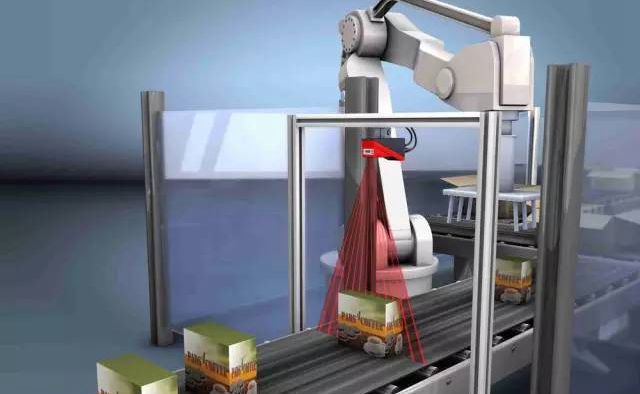
With the gradual disappearance of the demographic dividend, China has become the world's largest industrial robot market. Currently, there are over 30 robot factories under construction in China, and the next 10 years will be a golden period for the development of domestic robots.
With the development of industrial robots and the improvement of robot intelligence, industrial robots have been applied in many fields. At present, the use of industrial robots in China is mainly concentrated in the automotive and electronic and electrical industries, arc welding robots, spot welding robots, and handling robots, which are widely used in production.
The application of industrial robots has improved the production efficiency, production costs, and product quality of industrial products, and has also promoted the transformation and upgrading of China's manufacturing industry to a certain extent. At the same time, with the disappearance of China's demographic dividend, China's economic development has entered the "New Normal", and the emergence of such phenomena as the shift of manufacturing industry from "low-end manufacturing" to "high-end manufacturing" has also increased the use of industrial robots.
There is no need to elaborate on the advantages of industrial robots compared to humans, as these points are often shared by any automation device, such as stable quality, not resigning, and not mind dangerous, dirty, and tedious work. Below, we will discuss the current advantages and disadvantages of industrial robots from a technical perspective.
1. Universality
Industrial robots are programmable and support multi degree of freedom motion, making their applications more flexible. Although inferior to humans, industrial robots are still much more flexible compared to many common specialized machines in industrial automation, such as electromechanical integration solutions tailored for a specific type of industrial application or a customer. When there are not significant changes in industrial applications, robots can be reprogrammed to meet new requirements without the need for significant hardware investment. But correspondingly, its relative deficiency will be efficiency. After all, the dedicated machine is customized for an application, so although it sacrifices universality, it achieves efficiency optimization and can achieve good results in terms of production volume, which is a very important indicator for customers.
2. Mechanical and Electrical Performance
Industrial robots can generally achieve motion accuracy of less than 0.1 millimeters (referring to repeated motion to point accuracy), grab objects weighing up to one ton, and extend up to three or four meters. Although such performance may not easily meet some of the "crazy" processing requirements on Apple phones, it is sufficient to successfully complete tasks for the vast majority of industrial applications. With the gradual improvement of robot performance, some previously impossible tasks have become feasible (such as laser welding or cutting, which used to require specialized high-precision equipment to guide the direction of laser, but with the improvement of robot accuracy, it has now become possible to rely on the accurate motion of the robot itself to replace it). But compared to traditional high-end equipment, such as high-precision CNC machine tools, laser calibration equipment, or special environment (high or ultra-low temperature) equipment, industrial robots are still unable to reach it.
3. Human machine cooperation
The traditional industrial robot works in a cage because it is really dangerous (imagine a guy holding dozens or hundreds of kilograms swinging at the speed of four metre per second, and no one wants to get close). The main reason is that general robots, based on cost and technology considerations, do not integrate additional sensors to perceive external special situations (such as sudden human touch). They will only "foolishly" follow the programmed actions of humans day after day, unless there is an external signal telling them to stop. So a common solution is to equip the robot with a cage, and when the cage door is opened, the robot will automatically pause upon receiving a signal.
The consideration of safety naturally brings many additional costs to robot integration. Cages may not be expensive, but after all, it is necessary to carefully consider the layout of production lines, increase production line area, change human-machine cooperation methods, and so on, which can affect production efficiency. So recently, industrial robots that have received more attention have all taken pride in being able to work safely with humans, such as RethinkRobotics' Baxter, UniversalRobots' PR series, and many traditional industrial robot giants (abb, kuka, Yaskawa, etc.) 'semi concept and semi-finished robot humans'. From the perspective of industrial demand, it is indeed time to start meeting human-machine safety cooperation after traditional industrial robots have solved automation requirements such as precision, speed, and weight.
4. Ease of use
The essence of traditional robots is to continuously walk through path points while receiving or setting peripheral I/O signals (in cooperation with other settings such as fixtures, conveyor lines, etc.). The process of guiding robots to do so is robot programming. Almost every leading company has its own programming language and environment, which requires robot operators to participate in learning and training. As the applicability of robots expands, this cost begins to emerge.
These manufacturers have reasons to maintain their own programming environment. Firstly, industrial robots began to scale up 40 years ago, and there were no mainstream advanced programming concepts such as object-oriented programming that are now widely known and recognized. Secondly, in the early stages of their development, their own technology will inevitably be different from competitors, and maintaining a programming approach is understandable. Thirdly, because their major customers are often also traditional industrial clients, Like big car manufacturers, these customers seek stability and naturally do not want your robots to rush to change programming methods in a few years, causing them to throw away decades of experience and spend a lot of money on training and learning again.
Of course, in the industry, people have long thought about whether programming can be done more intuitively and simply. However, in traditional manufacturers, there has been little commercial and practical progress except for conceptual demonstrations (such as using exoskeletons, 3D images, virtual reality, iPhone, etc.), to the point where people feel nauseous when they hear keywords such as "simple programming" again.
But fortunately, there are still latecomers who dare to challenge and make achievements from scratch, becoming recognized selling points. Yes, that's RethinkRobotics and Universal Robots! This also vividly demonstrates why disruptive technologies often do not succeed in leading enterprises (despite having sufficient resources) in the dilemma of innovators, but are always carried forward by later challengers. Because leaders often take one step away from their iron rice bowl with every step they take in disruptive technology, resulting in significant internal and external resistance!
Anyway, the ease of use of robots has begun to receive attention, and how to enable people to quickly play robots like playing iPhones without any (or too much) training has become a major investment direction for major manufacturers.
5. Cost
The cost of robots ranges from tens of thousands of RMB for small models to millions of RMB for large ones. This cost is naturally lower than high-end professional manufacturing equipment, but it may also be higher than the automation solutions pieced together by small domestic integrators. However, from the popularity of robots in the Western industrial community and domestic manufacturing in recent years, it can be seen that the economic advantages of robot automation have generally reached a critical point, surpassing other alternative solutions (such as manual labor or specialized aircraft). It seems that this cost is still worth it.
In fact, if we have to follow the old path of traditional robots, there is not much room for reducing hardware costs. Industrial robots are basically an open-loop motion mechanism that relies on the high-precision coordination of motors and gearboxes. And most of the key components of leading manufacturers are purchased from several Japanese manufacturers (which are also robots manufactured by domestic companies themselves. Buying the same components won't be much cheaper because Japanese manufacturers won't offer much discounts for your quantity). Unless Chinese component manufacturers can calm down and strive to catch up with Japanese technology, thereby breaking years of monopoly with price advantage, they can truly promote the development of domestic robot manufacturers.
The other is to explore new ways and pursue other technologies and markets. At that time, RethinkRobotics even considered using plastic gearboxes to reduce costs and compensate for the loss of motion accuracy through vision, just like human eyes assisting in the delicate operation of hands. But after all, Baxter robots cannot reach the sky in one step, so they cannot compare with traditional robots in terms of accuracy and speed temporarily. However, in the application of material grasping and releasing that it can handle, it is also sufficient. Perhaps with Rethink's efforts, in the case of poor hardware, it will make up for it through intelligent software to compete with traditional industrial robots (which is truly subverting these traditional big manufacturers).
6. Intelligence
The reason why intelligent robots are placed last is because compared to the current mainstream demand for robots in the market (i.e. strong, fast, and accurate), they are not yet the most urgent. This also reflects the advantages and disadvantages of traditional industrial robots (hardworking, quality and quantity guaranteed, and being a skilled worker) and (but very clumsy, old enough to be taught).
But it doesn't mean that intelligence is not important, on the contrary, companies have already started investing in technology. For example, how to make robots better understand human command intentions and relatively autonomous in understanding and planning tasks, without having to be told how to walk step by step; How to make the robot automatically adapt to changes in the peripheral environment (dim light affects image recognition, and items on the conveyor belt need special treatment); How to judge the assembly quality of components through tactile, visual, auditory, and other senses, and so on.
Americans are doing relatively well in this area (of course, they are also avoiding reality and defeating reality, as the technology and market of traditional industrial robot hardware have been basically dominated by Japanese and European companies), ROSIndustrial, RethinkRobotics, and others are making leading attempts.
7. Talent shortage
Industrial robots are in line with the development of the times and have broad prospects in the industry. However, the imbalance between talent supply and demand in this field is becoming increasingly prominent. On the one hand, robot manufacturers, system integrators, and the automotive manufacturing industry are eager for talent, and on the other hand, there is a shortage of talent supply, making it difficult to meet the employment needs of enterprises.
The main reason for this is that compared to the explosive development trend shown by the domestic robot industry in recent years, the curriculum design of training institutions such as universities and vocational schools is still lagging behind. Although some robot manufacturers provide relevant training, there are shortcomings such as strong brand targeting, insufficient promotion efforts, insufficient supporting facilities, and limited training networks, making it difficult to achieve a systematic teaching process, It is not yet in line with the needs of scholars from all over the country, resulting in many aspiring to join the robotics industry without access to education.
The Current Situation of High Speed Precision Stamping Technology and the Development Trend of Dies
Typical Overview of High Speed Precision Stamping Production Technology
Related Article

In order to create new products that are constantly emerging on the market, we use different methods to process various materials.
What is Molding Processing? We will introduce some representative molding processing methods

In the context of vehicle electrification and intelligence, human-computer interaction with consumer experience and intelligent control as the core has become an important development theme of intelligent cockpits. The on-board display is at the core of the intelligent cockpit, benefiting from the continuous development of the Internet of Vehicles and smart cars, the on-board display will usher in new development opportunities.
Lighting up new opportunities for automotive electronics - all at the 2025 Guangzhou International Automotive Intelligent Cockpit and Vehicle Display Technology Event

The 2025 Asia International Power Semiconductor, Materials and Equipment Technology Exhibition will focus on "Focusing on Cutting-edge Technology Breakthroughs and Empowering Industrial Innovation and Integration". It will be held on November 20-22, 2025 at Guangzhou Poly World Trade Center Expo!
Focus on the power semiconductor industry - APSME 2025 Asia International Power Semiconductor, Materials and Equipment Technology Exhibition will be held in Guangzhou

Lexey's multi-axis bus stepper drivers – 2DM3/2CL3-EC (open/closed-loop) dual-axis series and 4DM3/4CL3-EC (open/closed-loop) four-axis series are innovative technologies designed to solve the above problems and help your equipment to achieve efficient upgrades.
"Three provinces" drive: Leisai multi-axis bus stepping, opening a new chapter in the miniaturization and upgrading of precision equipment