
Advantages and applications of artificial intelligence in CNC machining
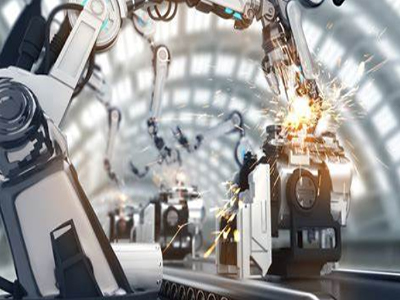
With the rapid development of science and technology, artificial intelligence has gradually penetrated into various fields, including numerical control (CNC) machining. CNC machining services are the core part of modern manufacturing, and their efficiency and precision directly affect the quality and cost of products. The application of artificial intelligence has brought revolutionary changes to CNC machining, which can greatly improve the efficiency and accuracy of machining.
Advantages of artificial intelligence in CNC machining
(1) Accuracy improvement: AI can control and optimize the CNC machining process more accurately through deep learning and big data analysis. For example, AI can accurately predict tool wear by monitoring subtle changes in vibration, temperature, and sound during the cutting process in real time, so as to make real-time adjustments during the machining process to ensure machining accuracy.
(2) Efficiency optimization: Artificial intelligence can quickly analyze a large number of processing data to find the best combination of machining parameters such as cutting speed, feed rate, and depth, which can not only improve machining efficiency, but also reduce tool wear, prolong tool life, and reduce production costs.
(3) Increased degree of automation: AI can fully automate CNC machining tasks, automatic programming, from toolpath planning, cutting process control to quality inspection. Without manual intervention, a lot of time and effort can be saved, making the production line more efficient. This automation can reduce the requirements for employee skills, reduce the chance of human error, and improve production stability.
(4) Respond to complex tasks: For some complex and delicate parts processing, AI can ensure the accuracy and consistency of the machining process through high-precision modeling and simulation.
(5) Fault warning: artificial intelligence can monitor the operation status of the machine tool in real time, and predict possible failures in advance by analyzing various sensor data, so that maintenance personnel can intervene before the failure occurs, reduce downtime and improve equipment utilization.
(6) Strong flexibility: AI has strong learning ability and adaptability, and can quickly adapt to different processing environments and conditions. When processing needs change, AI can quickly adapt to the new production environment by relearning and adjusting.
(7) Data-driven decision-making: Artificial intelligence can transform a large amount of production data into valuable information and provide decision-making basis for managers. For example, through the analysis of historical machining data, it is possible to identify the key factors that affect the efficiency and accuracy of machining, and further optimize the production process.
Specific applications of AI in CNC machining
1. Intelligent identification and positioning
In CNC machining, accurate positioning methods can ensure the accuracy and stability of machining, and intelligent identification and positioning of workpieces can be realized through AI technology.
First, a large number of images and samples containing the target workpiece are collected, and even images containing different scenes. For example, images from different angles and under different lighting conditions;
Next, the collected images are processed to extract features, such as edges and shapes;
Then, the AI model is trained with the extracted features and corresponding labels so that the model can identify the type of workpiece based on the input information.
After that, by adjusting the model parameters, the optimized model is deployed to the actual production environment, so that the machine can automatically identify the characteristics of the workpiece, determine the position and posture of the workpiece, and even quickly and accurately identify the type, size, material and other information of the processed material.
This information is essential for subsequent machining, helping to ensure the accuracy and efficiency of machining, so as to achieve fast and accurate positioning of the workpiece.
2. Intelligent programming
Through AI technology, processing programs can be automatically identified and generated, reducing the time and errors of manual programming. Automatically optimize cutting parameters and machining paths according to machining needs to improve machining efficiency. Using machine learning algorithms, NC programming languages and rules are trained to generate models that can automatically generate executable NC programs. This can significantly improve efficiency in the early development phases and enable more precise prototype concept realization.
The model can generate a numerical control program by talking to people, and generate corresponding instructions as needed, only need to input verbal instructions, and do not need to write complex numerical control programs by hand, so that the programming process is more simple and efficient, avoids the errors caused by hand-writing CNC programs, improves processing accuracy and quality, and reduces waste.
summary
To sum up, the application of artificial intelligence in CNC machining has achieved remarkable results, which can effectively improve processing efficiency, accuracy and equipment reliability, and promote the transformation and upgrading of the manufacturing industry. But it is also a double-edged sword, and while enjoying the convenience it brings, it is also necessary to pay attention to and solve the problems and challenges that may be brought.
"Three provinces" drive: Leisai multi-axis bus stepping, opening a new chapter in the miniaturization and upgrading of precision equipment
DMG MORI Technology Cycle | Faster and more accurate measurements
Related Article


