
The agency predicts that humanoid robots will usher in a breakthrough year this year, and China's robot industry chain is expected to benefit deeply

According to the latest research report by Omdia, a United Kingdom market research organization, global humanoid robot shipments are expected to exceed 10,000 units by 2027 and 38,000 units by 2030. This represents a CAGR of 83% from 2024-2030.
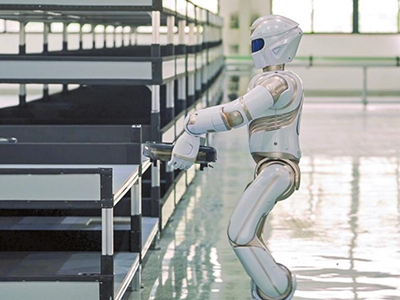
Omdia believes that 2024 will be a year of breakthroughs for humanoid robots. Fueled by the human-mimicking generative artificial intelligence (GenAI) craze, humanoid robots represent the next major technological leap. Extensive investment from technology pioneers such as Boston Dynamics has led to the large-scale commercialization of bipedal anthropomorphic form specifications.
Notably, Omdia mentions several Chinese humanoid robotics companies, including start-ups such as Mindmind, Xiaomi, Fourier, UBTECH, and Yushu.
Now, Chinese and foreign tech giants are turning their attention to humanoid robots. NVIDIA recently announced that it will provide a suite of services, models and software platforms for the world's leading robotics manufacturers, AI model developers and software manufacturers to develop, train and build the next generation of humanoid robots.
Musk also recently said that Tesla will start mass production of "really useful" Optimus humanoid robots in early 2025, and it is expected that more than 1,000 or thousands of Optimus Prime robots will work at Tesla; Mass production of Optimus will begin in 2026 and deliveries to external customers.
What's more, the hot sales of humanoid robots coincide with the growing demand for robotic automation around the world. According to Omdia, the adoption of robotics in the enterprise and industrial sectors is expected to see strong growth, mainly driven by automated guided vehicles, autonomous mobile robots, quadruped robots, and humanoid robots.
Last night, the domestic robot leader EFORT announced that the company intends to purchase land in Wuhu City, Anhui Province for investment in the construction of EFORT robot super factory and global headquarters project, according to preliminary estimates, the project investment is expected to not exceed 1.9 billion yuan. After the project is completed and put into production, it is expected to achieve an annual output of 100,000 high-performance industrial robots.
On the same day, another leading domestic enterprise Estun also announced that in order to meet the business development needs of its wholly-owned subsidiary, Nanjing Estun Robot Engineering Co., Ltd. (hereinafter referred to as "Estun Robot"), improve its capital strength and operational capabilities, and expand and strengthen the robot industry, the company plans to use its own funds of 450 million yuan to increase the capital of Estun Robot.
Shanghai Securities said that the humanoid robot industry chain is currently in the stage of "0-1" to "1" accelerating and approaching, and 2024 is the first year of commercialization of humanoid robots, and the commercialization of humanoid robots can be expected.
Haitong Securities believes that the humanoid robot industry chain is gradually improving, from core components such as lead screws, frameless torque/coreless motors, reducers, various sensors to control systems, and then to the final integration and application, all links are gradually forming a complete supply chain. Humanoid robots have a wide range of applications, from manufacturing to home services, to medical care and education and training, there is a huge potential demand.
Despite optimistic forecasts, humanoid robotics is still in its infancy. The complexity of these robots makes mass production and large-scale deployment tricky, and most are still in the experimental or proof-of-concept phase. Large-scale implementation may take several more years. Su Lianjie, Chief Analyst at Omdia, commented: "Chinese companies such as MindMinds are exploring the integration of basic models into humanoid robots to enable natural language interaction between humans and robots. "
Today, China is the country with the most complete industrial system in the world, with the world's largest and most complete manufacturing system, and the robot industry is no exception, with certain advantages in a number of key components. Humanoid robots were born out of the robot industry and integrated with cutting-edge technologies such as generative AI.
5-axis CNC machining
New breakthrough! The 15mm insect-level jumping robot was introduced
Related Article


