
For humanoid robots, China has big plans

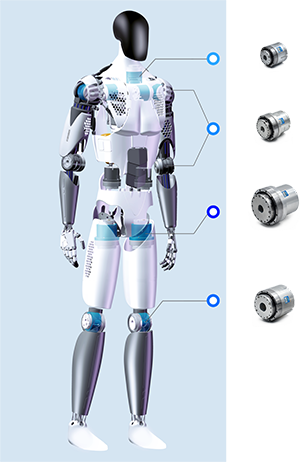
Hong Kong's South China Morning Post article on July 17, original title: With demographic changes, China wants humanoid robots to automate elderly care and handle heavy lifting In the exhibition hall of a science and technology fair in Shanghai, a humanoid robot (pictured) takes a few small steps, and although it is still unable to jump on its own, it shows that China's robotics industry has made great progress. At first glance, it may seem a bit clumsy and not as perfect as a robot in a science fiction movie, but this device grabs objects and "talks" in sign language. The developers see its future as being primarily in the homes of the elderly – providing them with companionship and much-needed help.
With tensions between China and the United States and increased competition in technology, China has set its sights on high-end manufacturing, and many developers of humanoid robots have emerged. Industry insiders say that humanoid robots are not only proficient in the use of tools, but also respond to human emotions, so they are expected to help fill the gap in elderly care services caused by aging and shrinking workforce.
As a new highland of global scientific and technological competition, the Chinese humanoid robot industry entered an explosive period last year, with the industrial scale growing to 3.91 billion yuan, a year-on-year increase of 85.7%, and is expected to exceed 20 billion yuan in 2026. Robots are taking on a lot of the amount of labor that cannot be done due to the dwindling labor force, and are becoming an important new engine of economic growth. Humanoid robots can not only be an efficient helper for families, but also help businesses reduce costs and produce more standardized goods.
China's Ministry of Industry and Information Technology (MIIT) issued an ambitious blueprint document in November last year ("Guiding Opinions on the Innovation and Development of Humanoid Robots" – Editor's Note), proposing that China will mass-produce humanoid robots with artificial intelligence "brains, cerebellum and limbs" by 2025.
Qiu Yufeng, an entrepreneur in the industry, believes that for China, which is gradually moving into an aging society, the value of humanoid robots is not limited to solving the shortage of skilled workers, but also has the potential to bring significant changes to the care of the elderly: "Anthropomorphic robots can interact with the elderly, provide emotional support, companionship and other help." In contrast, human caregivers are expensive and potentially abusive to the elderly. ”
In the past decade, China has achieved a shift from lagging behind to catching up or even leading in humanoid robot technology patents. With the booming development of companies in the industry, China is not far from the goal of mass production of humanoid robots by 2025. "As companies continue to learn and integrate resources, China may be able to build a complete supply chain within a few years," Qiu said. But time is of the essence. ”
Industrial robots, those who have a large load win the world
Analysis of the scale of the global industrial robot market and the scale of China's industrial robot industry
Related Article


