
Hikrobot's high-speed linear array 2.5D visual inspection system makes defect detection easier!
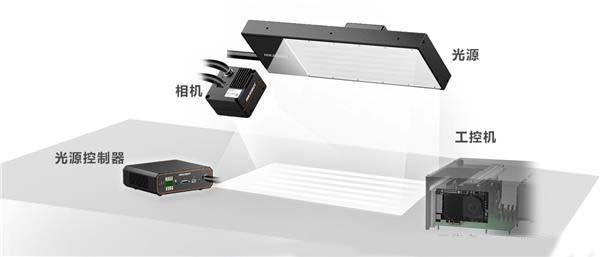
In today's era of pursuing quality, whether it is a high-end new energy battery or a smart phone in our hands, every high-quality product is inseparable from precise quality testing. However, quality inspection is challenging when faced with subtle defects on highly reflective or transparent surfaces. As a result, a new 2.5D vision technology has quietly risen.
New solutions to old pains: two major advantages of 2.5D vision
1. Go beyond 2D and gain insight into micron-level defects
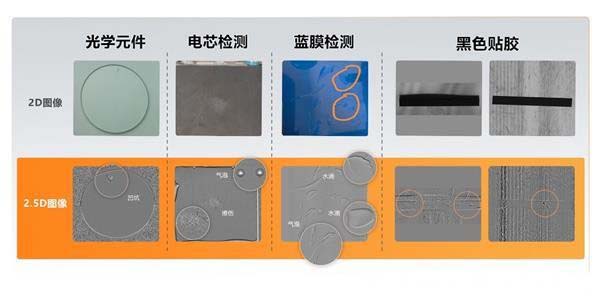
Historically, scratches, bumps, and dirt on high-gloss transparent materials have often been "blind spots" for 2D vision systems. However, 2.5D vision cleverly removes background distractions and surface reflections, capturing not only flat information but also changes in surface depth, meaning that even micron-sized imperfections are nowhere to be found. This high-contrast display of defects allows for unobstructed details such as scratches, bumps, and dirt at a glance, providing unprecedented accuracy for product quality inspection.
2. Standardization and multi-function at the same time
Traditional inspection solutions often require specialized equipment to be tailored to different defects, which is not only costly, but also has a low degree of standardization. 2.5D vision technology is different, as it can detect multiple types of defects at the same time with a single light source, regardless of angle, which greatly improves the versatility and efficiency of the solution. What's more, multiple types of results can be output in a single shot, from small bumps to complex scratches to tiny dirt, demonstrating powerful composite inspection capabilities.
With these significant advantages, 2.5D vision technology is quickly becoming the new favorite of new energy, 3C electronics, automobile manufacturing, optical components, metal processing, panel film and other industries.
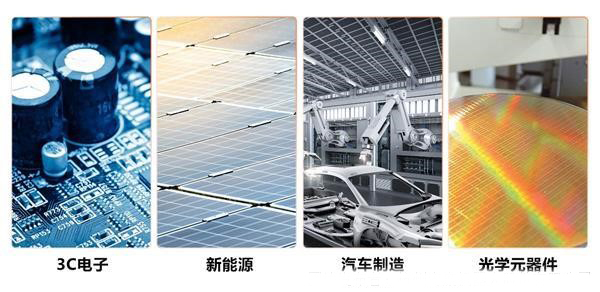
Hikrobot high-speed linear array 2.5D visual inspection system
As a leading enterprise in the field of machine vision products and solutions, Hikrobot has launched a high-speed linear array 2.5D visual inspection system this year, which integrates high-speed linear scan camera, program-controlled stripe light source, light source controller, acquisition card, debugging accessories, and client software, providing one-stop service for software and hardware products, which is easy to use. The system configuration is flexible, and it can be matched with line scan cameras of different resolutions and program-controlled light sources of different specifications to meet the needs of diverse scenarios with different detection formats and accuracy.
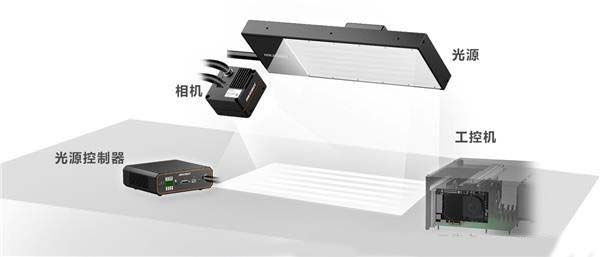
According to user feedback, Hikrobot's 2.5D vision inspection system is equivalent to an easy-to-use super glasses, with which the defect detection of highly reflective or transparent objects becomes super easy.
In this regard, Hikrobot technicians said that the 2.5D system has a built-in stripe pattern of multiple modes, which can automatically respond to the matching light source pattern according to different operation scenarios, and truly reflect the light and dark distribution of the surface of the object; The system supports one-button detection, quickly outputs 7 kinds of algorithm result diagrams, and comprehensively displays a variety of defects. Users can easily set the parameters of the 2.5D system in the Hikrobot 2.5D client software, integrate a variety of debugging tools, and improve operation efficiency.
At the same time, the high-speed linear array 2.5D visual inspection system supports the connection to the VM algorithm platform for defect identification, so as to realize the whole process of high-precision imaging and defect identification.
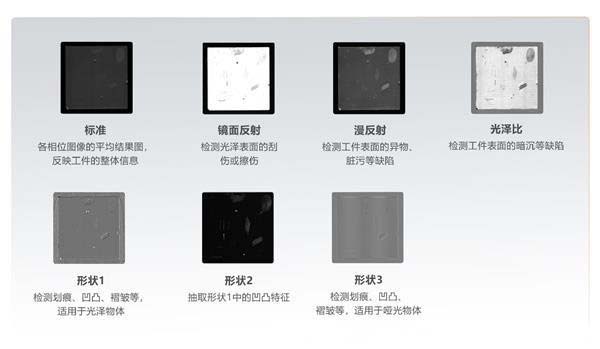
It is reported that Hikrobot's high-speed linear array 2.5D visual inspection system has been applied in many projects. For example, the detection of defects such as scratches, punctate or block concave and convex on the surface of the aluminum plate of the shell of lithium battery cells, the detection of defects such as scratches, bubbles and water droplets on the surface of blue film batteries, the detection of pits, pittings and dirt of optical components, and the detection of gluing defects on the border of mobile phones in the 3C industry.
The 2.5D system also continued to appear in the national tour of Hikrobot's machine vision, and attracted the attention of users in lithium battery, semiconductor, 3C and other industries.
Analysis of the scale of the global industrial robot market and the scale of China's industrial robot industry
Reduce costs and increase efficiency, FAO robots help CNC automation upgrade and speed up
Related Article


