
A Computational Ghost Imaging Architecture Connecting the Human Brain and Computers
author: Hansheng Automation
2023-06-12
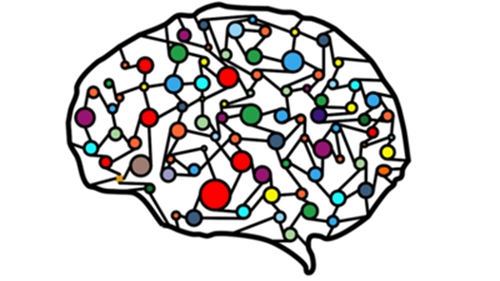
Recently, Wang Gao, a doctoral student in physics at the University of Glasgow, UK, proposed an architecture to connect the human brain and the computer to realize computational ghost imaging (CGI). His related paper "Computational Ghost Imaging with the Human Brain" has been published in Intelligent Computing.
The so-called computational ghost imaging (CGI) refers to the use of correlation calculations to obtain object information. This research achievement can image objects beyond the human eye's line of sight, thereby enhancing human visual perception and providing new ideas for the development of augmented reality, human-computer interaction, and other fields.
Brain–computer interface (BCI) is a technology that connects the human brain with an external computer or machine, controls the behavior of the computer or machine, and reads or monitors the activity of the brain by identifying and analyzing the electrical signals sent by the brain. Its research results provide a Technology roadmap for exploring brain neuroscience, and provide new clues for understanding the Neurophysics mechanism of human visual system, which can be used to study the differences between conscious and unconscious EEG states.
In the process of developing a computing ghost imaging architecture, Wang Gao used the human visual system as a detector; The commonly used visual evoked signals in Brain–computer interface were investigated, and Steady state visually evoked potential (SSVEP) was selected as a part of imaging detection. On this basis, he conducted extensive experiments to study the intensity relationship between optical stimulus input and SSVEP output, and drew corresponding thermal maps, providing a foundation for subsequent successful imaging. At the same time, Wang Gao proposed an adaptive computing loop that provides real-time feedback control of SSVEP signals on optical speckle, thereby accelerating imaging speed, reducing detection times, and shortening the time required for imaging. As a result, he constructed a deep neural network for computing ghost imaging, which achieved imaging mapping from intensity detection sequences to object images for SSVEP, reducing the impact of noise and improving the quality of imaging.
The research results of Wang Gao's ghost imaging architecture have great potential in specific applications:
First, in terms of human enhancement, the use of Brain–computer interface to achieve computational imaging can expand human perception, for example, to achieve the imaging of scenes outside the human line of sight.
Secondly, in terms of human-computer interaction, imaging the area being watched through the human eye is expected to enhance the interaction ability between disabled people and the outside world.
Third, in terms of Neurophysics, this achievement provides a Technology roadmap to explore brain neuroscience, such as the representation of EEG differences in conscious and unconscious states.
Fourthly, in medicine, this technology can provide a potential framework and method for examining the function of visual pathways in the human brain.
Fifthly, in terms of brain computer integration, this technology can potentially utilize the powerful data processing capabilities of the human brain to process visual stimuli in external environments, and complete complex tasks by reading EEG signals recorded by BCI. For example, using the human brain to recognize or classify images.
Tongkuai has developed new applications for laser AI, greatly improving manufacturing efficiency
The penetration rate of skeletal robots in China and abroad is low, and the market scale is expected to grow rapidly
Related Article

In order to create new products that are constantly emerging on the market, we use different methods to process various materials.
What is Molding Processing? We will introduce some representative molding processing methods

In the context of vehicle electrification and intelligence, human-computer interaction with consumer experience and intelligent control as the core has become an important development theme of intelligent cockpits. The on-board display is at the core of the intelligent cockpit, benefiting from the continuous development of the Internet of Vehicles and smart cars, the on-board display will usher in new development opportunities.
Lighting up new opportunities for automotive electronics - all at the 2025 Guangzhou International Automotive Intelligent Cockpit and Vehicle Display Technology Event

The 2025 Asia International Power Semiconductor, Materials and Equipment Technology Exhibition will focus on "Focusing on Cutting-edge Technology Breakthroughs and Empowering Industrial Innovation and Integration". It will be held on November 20-22, 2025 at Guangzhou Poly World Trade Center Expo!
Focus on the power semiconductor industry - APSME 2025 Asia International Power Semiconductor, Materials and Equipment Technology Exhibition will be held in Guangzhou

Lexey's multi-axis bus stepper drivers – 2DM3/2CL3-EC (open/closed-loop) dual-axis series and 4DM3/4CL3-EC (open/closed-loop) four-axis series are innovative technologies designed to solve the above problems and help your equipment to achieve efficient upgrades.
"Three provinces" drive: Leisai multi-axis bus stepping, opening a new chapter in the miniaturization and upgrading of precision equipment