
The Current Situation of High Speed Precision Stamping Technology and the Development Trend of Dies
author: Hansheng Automation
2023-05-10
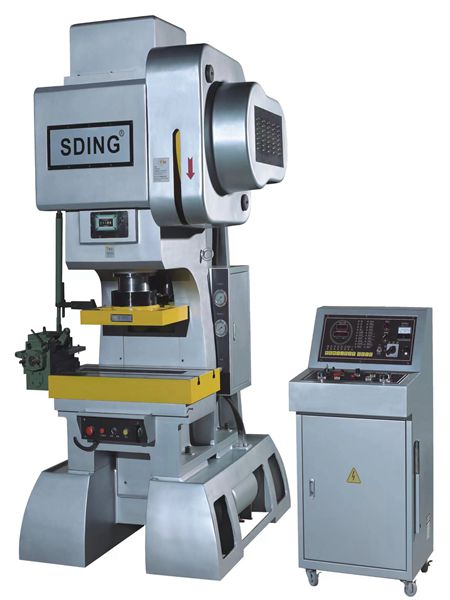
High speed precision stamping technology is an advanced manufacturing technology in modern stamping production, which integrates high-tech technologies such as high-speed press technology, high-precision stamping die technology, high-quality product material technology, and intelligent control technology. Currently, modern advanced manufacturing technology is a research and development topic for countries around the world, especially in today's highly developed market economy, where it holds a very important position.
High speed precision stamping technology is mainly based on the use of sheet metal processing products, consisting of three basic elements: high-speed press equipment, precision progressive molds, and high-quality coil materials. It is combined into a stamping automation production line according to the stamping process flow through the coordination and connection of automation peripheral equipment such as uncoiling device, leveling device, feeding device, material lubrication device, output device, processing device, and receiving device. Stamping automation can not only significantly improve labor productivity, improve labor conditions, and reduce costs, but also effectively ensure personal safety in stamping production, fundamentally changing the appearance of stamping production. Therefore, it is widely used in the fields of electronics, communication, automobiles, machinery, military industry, light industry, electrical machinery, instruments and meters, medical equipment, automation equipment, and home appliance product manufacturing. The application in the manufacturing of products such as rail transit, aerospace, and new energy is also becoming increasingly widespread.
1、 Development status of high-speed precision stamping technology
1. Application of High Speed Press Technology
With the rapid development of product technologies such as electronic communication, electrical appliances, automobiles, and home appliances, the demand for precision stamping parts is increasing, and the technical requirements are also increasing. The application range is also becoming more and more widespread, so ordinary press machines can no longer meet the requirements of production and technology. Subsequently, the use of high-speed precision presses for high-speed, automated, and continuous stamping has become an effective way to improve stamping productivity. Due to the fact that the slider stroke per minute of high-speed precision presses is more than 5 times higher than that of ordinary presses with similar tonnage, not only does the stamping product have high precision, good surface quality, but also the mold has a long service life.
In recent years, with the continuous development of stamping technology towards high-speed, precision, and intelligence, the development momentum of high-speed press machines has been further promoted. Many high-speed precision press machines and ultra high-speed precision press machines have emerged, such as Raster Company in Germany, Minster Company in the United States, Breeder Company in Switzerland, Schuler Company in Germany, Nengrate in Japan, and small tonnage high-speed precision press machines developed by product companies, The slider stroke times can reach 2000 times/min, 3000 times/min, and 4000 times/min. Under load, it can meet the special precision requirements of the standard, marking the development of high-speed precision press technology to a stage of ultra high speed and ultra precision technology. In foreign countries, some companies classify small tonnage high-speed precision presses into the following four speed levels based on the number of slider strokes: constant speed ≤ 250 times/min, sub high speed>250-400 times/min, high speed>400-1000 times/min, and super high speed ≥ 1000 times/min. Due to the variation of stamping speed with various factors such as the tonnage of the press, the length and frequency of slider stroke, product process structure and material process performance, automatic feeding speed and accuracy, it is difficult to use simple numbers as boundaries for dividing different levels. Therefore, there is currently no clear definition of the speed range of high-speed precision presses internationally, and presses with stamping speeds 5-10 times higher than ordinary presses are generally referred to as high-speed precision presses. From the application situation of high-speed precision presses in most domestic enterprises, it is reasonable to calculate the impact speed based on the average of the minimum and maximum strokes of the slider, or an impact speed greater than 10-20% of the average value. Because the maximum stroke of the slider in a high-speed precision press generally refers to the number of unloaded strokes. When the number of strokes reaches a certain value, the imbalance phenomenon of the press during operation significantly increases, and the dynamic change of the lower dead center of the slider is significant. It is necessary to solve a series of technical problems such as coil quality, feeding speed, mold performance and life, equipment strength and accuracy, automatic monitoring and stability of faults, vibration and noise, as well as lubrication and cooling systems, So the rationality of the punching speed in the application of high-speed precision presses is crucial.
2. Types and Technical Characteristics of High Speed Precision Stamping Parts
High speed precision stamping parts can be divided into electronic parts according to industry, usage, and process characteristics, mainly including connectors, connectors, brush parts, terminals, elastic parts, etc; IC integrated circuit lead frames mainly include discrete device lead frames and integrated circuit lead frames; The motor core category mainly includes single-phase series motor core, single-phase household motor core, single-phase cover plate motor core, permanent magnet DC motor core, industrial motor core, plastic sealed stator core, etc. Electrical core category, mainly including E-shaped transformer core, EI shaped transformer core, I-shaped transformer core, etc; Heat exchanger fins, mainly including industrial heat exchanger fins, household heat exchanger fins, automotive heat exchanger fins, etc; Automotive parts category, mainly including automotive structural components and automotive functional components; The category of household appliance parts mainly includes household appliance parts such as color tube electronic gun parts, and small household appliance parts such as various structural and functional parts; Other types of parts mainly include instrument and meter parts, IT parts, acoustic camera parts, modern office supplies parts, hardware parts, etc.
The technical characteristics of high-speed precision stamping parts include a variety of varieties, material diversity, thin plate rolling, large automated production batches, high precision, complex shapes, high technical content and added value.
3. Cases of High Speed Precision Stamping Production Technology
(1) Integrated electrical lead frame stamping production technology. The lead frame is the carrier of discrete devices and integrated appliances. Its main characteristics are a wide variety, large batch size, high accuracy, small shape, extremely thin material, local electroplating required on the surface, and strict appearance requirements. In recent years, with the development of technology, the production technology of high-speed precision stamping lead frames in China has greatly improved compared to before. For example, an overview of SSOP-24 integrated circuit lead frame stamping production technology: the product material is C194 copper alloy, with a thickness of 0.152mm of coil material. It consists of a coil holder, feeding device, guide mechanism, high-speed precision press, high-precision progressive die, and roll type receiving device, forming an automated production line. The stamping process includes typing, pressing points, punching, punching inner leads (A, B, C, D), punching a zigzag hole, and punching outer leads (A, B, C) Continuous stamping of 32 stations, including cutting separation, precision pressing of inner leads, mold sleeve, outer leads, step spacing, inner lead leveling, and finishing, with 4 rows of 11mm each punched at once × Punch out 24 inner and outer lead pins on a 9mm size surface, and meet the minimum spacing of 0.17mm between inner leads and other technical requirements. This product is produced on an 80t high-speed precision press, with a punching speed of over 450 times/min, and the overall level is close to the advanced level of similar international products.
(2) Motor core stamping production technology. Iron core is an important component of motor products, and in all stages of motor production, iron core stamping production technology is the key. At present, great progress has been made in the localization of high-speed precision stamping iron core automatic riveting technology in China. Taking the production technology overview of the three row twisted slot riveting and stamping of the iron core of the compressor motor as an example, the product material is 50W470 silicon steel sheet, with a thickness of 0.5mm. Through the high-speed operation of the uncoiling device, S-type leveling device, feeding device, material lubrication device, high-speed precision press, large precision progressive die, etc., the automatic stamping guide nail hole, rotor plate stacking and riveting process hole, rotor plate marking hole, rotor plate measuring hole, rotor plate groove hole, etc Cross continuous stamping of multi-station and multi-stage processes, including rotor step holes, rotor lamination riveting points, rotor shaft holes, rotor lamination riveting belt twist grooves, stator notch, stator marking holes, stator metering holes, stator slot shaped holes, stator lamination riveting points, stator inner holes, and stator lamination riveting, can complete three sets of stator and rotor iron cores at once. The thickness of the iron core riveting is 105mm, the outer diameter of the stator iron core is 110.52mm, and the inner diameter is formed by 20 slot holes to form F56.05mm. The outer diameter of the rotor iron core is 55.1mm, and 26 slot holes are twisted with grooves.
This product is produced on a 300t high-speed precision press, with a punching speed of 280-320 times/min, and its overall level is comparable to the international advanced level.
(3) Stamping production technology for heat exchanger fins. Heat exchanger fins are the main components of air conditioning products. In recent years, there has been a significant improvement in the production technology of high-speed stamping heat exchanger fins in China. For example, household air conditioning F5.2mm × 72 columns × Overview of high-speed precision stamping production technology for two-step fins: The product material is aluminum foil 1000-8H22, with a thickness of 0.105 mm of strip material. The automatic production line for fin stamping is composed of a spreading frame, oil passing device, feeding device, high-speed precision press, large precision progressive die, suction and collection device, etc. The strip material is processed through extension engineering, punching engineering, flanging engineering, louver engineering, central irregular cutting engineering, and end irregular cutting engineering Continuous stamping of 12 forming processes, including edge cutting, straightening, longitudinal cutting, and transverse cutting, produces 72 rows of fins at a time. The fins not only have complex shapes and high accuracy, but also require a smooth, flat, burr free surface and other technical requirements. This product is produced on a 100t high-speed precision special press, with a punching speed of 260 times/min. The high-speed precision stamping production technology for 12, 24, 36, 42, 48, 60, and 72 rows of fins developed domestically has reached the international level of similar products.
2、 The Development Trend of High Speed Precision Stamping Dies
Based on the current development of stamping molds in China, it can be seen that high-speed precision progressive stamping molds are one of the most promising molds to catch up with international advanced levels. However, it is still necessary for mold enterprises to conduct in-depth and detailed research in specialization, independent innovation, and basic theories and technologies of design and manufacturing processes, laying a solid foundation for China's overall technology of multi station and multi-functional stamping molds to catch up with international advanced levels. And while maintaining the development of high-level molds such as automatic lamination progressive molds for motor iron cores, fin progressive molds for air conditioning heat exchangers, integrated circuit framework progressive molds, and electronic connector progressive molds, we focus on developing micro and special stamping molds and their technologies for large automotive parts, multi-functional composite stamping molds, small part stamping molds, and special sheet materials, and overall improve the level of multi station and multi-functional stamping molds. In addition, "shape control and controllability" is the main direction of mold development, and the "shape control and controllability" technology of stamping molds is an important key technology that needs to be breakthrough in the near future. By studying the deep theoretical and technical issues of stamping forming, we can master the "shape control and controllability" technology and achieve the informatization and intelligent manufacturing of molds. Intelligence is a global development trend and a major feature of the "service era". For the mold industry, the informatization and intelligence of molds are important means to achieve "shape control and controllability", and an important aspect to catch up with and surpass the international advanced level of molds. It can drive the development of a series of advanced mold technologies and has important strategic significance. At present, the informatization and intelligence of molds in China are just beginning to take off, and there is still a long way to go to achieve informatization and intelligence of molds, and relevant policies are also needed to promote it.
Looking at the development path of mold technology and the forefront of the mold industry, the overall development trend of mold technology is "from improving the quality of the mold itself to the direction of shape control and integrated solutions for stamping products", that is, user requirements develop from mainly considering the quality of the mold itself to controlling the final product quality of mold production, Developing from a single requirement for mold quality to providing integrated solutions for user products. The requirements of users have broken through the boundaries of mold products themselves, and it is necessary to seek systematic solutions from the industrial chain, forcing mold technology and enterprises to extend to the relevant industrial chain of the manufacturing industry. Therefore, the application of a large number of interdisciplinary technologies and system solutions centered on molds will be the main characteristics of future mold development.
In the 21st century, with the continuous development of high-tech such as electronics and information technology, as well as the personalization and diversification of market demand, the overall trend of high-speed precision stamping technology and the development of high-end molds as the core will be precision, high-speed, flexibility, networking, integration, informatization and intelligence, low-carbon environmental protection, and globalization.
What materials are available for CNC machining at Futureworks
From a technical perspective, the advantages and disadvantages of industrial robots
Related Article

In order to create new products that are constantly emerging on the market, we use different methods to process various materials.
What is Molding Processing? We will introduce some representative molding processing methods

In the context of vehicle electrification and intelligence, human-computer interaction with consumer experience and intelligent control as the core has become an important development theme of intelligent cockpits. The on-board display is at the core of the intelligent cockpit, benefiting from the continuous development of the Internet of Vehicles and smart cars, the on-board display will usher in new development opportunities.
Lighting up new opportunities for automotive electronics - all at the 2025 Guangzhou International Automotive Intelligent Cockpit and Vehicle Display Technology Event

The 2025 Asia International Power Semiconductor, Materials and Equipment Technology Exhibition will focus on "Focusing on Cutting-edge Technology Breakthroughs and Empowering Industrial Innovation and Integration". It will be held on November 20-22, 2025 at Guangzhou Poly World Trade Center Expo!
Focus on the power semiconductor industry - APSME 2025 Asia International Power Semiconductor, Materials and Equipment Technology Exhibition will be held in Guangzhou

Lexey's multi-axis bus stepper drivers – 2DM3/2CL3-EC (open/closed-loop) dual-axis series and 4DM3/4CL3-EC (open/closed-loop) four-axis series are innovative technologies designed to solve the above problems and help your equipment to achieve efficient upgrades.
"Three provinces" drive: Leisai multi-axis bus stepping, opening a new chapter in the miniaturization and upgrading of precision equipment